Certified Cloud Security Professional Practice Test


CCSP Examination Information
Exam Duration : 3 hours
Number of questions : 125
Format : Multiple Choice
Passing scores : 700 out of 1000 points
Exam availability : English
Testing center : Pearson VUE Testing Center
About CCSP
(ISC) and the Cloud Security Alliance (CSA) developed the Certified Cloud Security Professional (CCSP)
credential to ensure that cloud security professionals have the required knowledge- skills- and abilities in
cloud security design- implementation- architecture- operations- controls- and compliance with regulatory
frameworks. A CCSP applies information security expertise to a cloud computing environment and
demonstrates competence in cloud security architecture- design- operations- and service orchestration. This
professional competence is measured against a globally recognized body of knowledge. The CCSP is a standalone credential that complements and builds upon existing credentials and educational programs- including
(ISC)s Certified Information Systems Security Professional (CISSP) and CSAs Certificate of Cloud Security
Knowledge (CCSK).
The courses included in the CCSP Common Body of Knowledge (CBK) ensure its relevancy across all disciplines
in the field of cloud security. Successful candidates are competent in the following 6 domains:
• Cloud Concepts- Architecture and Design
• Cloud Data Security
• Cloud Platform & Infrastructure Security
• Cloud Application Security
• Cloud Security Operations
• Legal- Risk and Compliance
Domains Weight
1. Cloud Concepts- Architecture and Design 17%
2. Cloud Data Security 19%
3. Cloud Platform & Infrastructure Security 17%
4. Cloud Application Security 17%
5. Cloud Security Operations 17%
6. Legal- Risk and Compliance 13%
Total: 100%
Domain 1:
Cloud Concepts- Architecture and Design
1.1 Understand Cloud Computing Concepts
» Cloud Computing Definitions
» Cloud Computing Roles (e.g.- cloud service customer- cloud service provider- cloud service partner- cloud service broker)
» Key Cloud Computing Characteristics (e.g.- on-demand self-service- broad network access- multi-tenancy-
rapid elasticity and scalability- resource pooling- measured service)
» Building Block Technologies (e.g.- virtualization- storage- networking- databases- orchestration)
1.2 Describe Cloud Reference Architecture
1.3 Understand Security Concepts Relevant to Cloud Computing
1.4 Understand Design Principles of Secure Cloud Computing
» Cloud Secure Data Lifecycle
» Cloud based Disaster Recovery (DR) and Business Continuity (BC) planning
» Cost Benefit Analysis
» Functional Security Requirements (e.g.- portability- interoperability- vendor lock-in)
» Security Considerations for Different Cloud Categories (e.g.- Software as a Service (SaaS)- Infrastructure as a
Service (IaaS)- Platform as a Service (PaaS))
1.5 Evaluate Cloud Service Providers
» Verification Against Criteria (e.g.- International Organization for Standardization/International
Electrotechnical Commission (ISO/IEC) 27017- Payment Card Industry Data Security Standard (PCI DSS))
» System/subsystem Product Certifications (e.g.- Common Criteria (CC)- Federal Information Processing
Standard (FIPS) 140-2)
» Cloud Computing Activities
» Cloud Service Capabilities (e.g.- application
capability types- platform capability types-
infrastructure capability types)
» Cloud Service Categories (e.g.- Software as a
Service (SaaS)- Infrastructure as a Service (IaaS)-
Platform as a Service (PaaS))
» Cloud Deployment Models (e.g.- public- private-
hybrid- community)
» Cloud Shared Considerations (e.g.-
interoperability- portability- reversibility-
availability- security- privacy- resiliency-
performance- governance- maintenance and
versioning- service levels and Service Level
Agreements (SLA)- auditability- regulatory)
» Impact of Related Technologies (e.g.- machine
learning- artificial intelligence- blockchain-
Internet of Things (IoT)- containers- quantum
computing)
» Cryptography and Key Management
» Access Control
» Data and Media Sanitization (e.g.- overwriting-
cryptographic erase)
» Network Security (e.g.- network security groups)
» Virtualization Security (e.g.- hypervisor security-
container security)
» Common Threats
2.1 Describe Cloud Data Concepts
» Cloud Data Life Cycle Phases
» Data Dispersion
2.2 Design and Implement Cloud Data Storage Architectures
» Storage Types (e.g. long term- ephemeral- raw-disk)
» Threats to Storage Types
2.3 Design and Apply Data Security Technologies and Strategies
2.4 Implement Data Discovery
» Structured Data
» Unstructured Data
2.5 Implement Data Classification
» Mapping
» Labeling
» Sensitive data (e.g.- Protected Health Information (PHI)- Personally Identifiable Information (PII)-
card holder data)
2.6 Design and Implement Information Rights Management (IRM)
» Objectives (e.g.- data rights- provisioning- access models)
» Appropriate Tools (e.g.- issuing and revocation of certificates)
Domain 2:
Cloud Data Security
» Encryption and Key Management
» Hashing
» Masking
» Tokenization
» Data Loss Prevention (DLP)
» Data Obfuscation
» Data De-identification (e.g.- anonymization)
2.7 Plan and Implement Data Retention- Deletion and Archiving Policies
» Data Retention Policies
» Data Deletion Procedures and Mechanisms
» Data Archiving Procedures and Mechanisms
» Legal Hold
2.8 Design and Implement Auditability- Traceability and Accountability of Data Events
» Definition of Event Sources and Requirement of Identity Attribution
» Logging- Storage and Analysis of Data Events
» Chain of Custody and Non-repudiation
Comprehend Cloud Infrastructure Components
3.2 Design a Secure Data Center
» Logical Design (e.g.- tenant partitioning- access control)
» Physical Design (e.g. location- buy or build)
» Environmental Design (e.g.- Heating- Ventilation and Air Conditioning (HVAC)- multi-vendor pathway
connectivity)
3.3 Analyze Risks Associated with Cloud Infrastructure
3.4 Design and Plan Security Controls
3.5 Plan Disaster Recovery (DR) and Business Continuity (BC)
Domain 3:
Cloud Platform and Infrastructure
Security
» Physical Environment
» Network and Communications
» Compute
» Virtualization
» Storage
» Management Plane
» Risk Assessment and Analysis
» Cloud Vulnerabilities- Threats and
Attacks
» Virtualization Risks
» Counter-measure Strategies
» Physical and Environmental Protection (e.g.-
on-premise)
» System and Communication Protection
» Virtualization Systems Protection
» Identification- Authentication and Authorization
in Cloud Infrastructure
» Audit Mechanisms (e.g.- log collection- packet
capture)
» Risks Related to the Cloud Environment
» Business Requirements (e.g.- Recovery
Time Objective (RTO)- Recovery Point
Objective (RPO)- Recovery Service Level
(RSL))
» Business Continuity/Disaster Recovery
Strategy
» Creation- Implementation and Testing
of Plan
4.1 Advocate Training and Awareness for Application Security
» Cloud Development Basics
» Common Pitfalls
» Common Cloud Vulnerabilities
4.2 Describe the Secure Software Development Life Cycle (SDLC) Process
» Business Requirements
» Phases and Methodologies
4.3 Apply the Secure Software Development Life Cycle (SDLC)
4.4 Apply Cloud Software Assurance and Validation
» Functional Testing
» Security Testing Methodologies
4.5 Use Checked Secure Software
» Approved Application Programming Interfaces (API)
» Supply-chain Management
» Third Party Software Management
» Validated Open Source Software
» Avoid Common Vulnerabilities During
Development
» Cloud-specific Risks
» Quality Assurance
» Threat Modeling
» Software Configuration Management and
Versioning
4.6 Comprehend the Specifics of Cloud Application Architecture
» Supplemental Security components (e.g.- Web Application Firewall (WAF)- Database Activity Monitoring
(DAM)- Extensible Markup Language (XML) firewalls- Application Programming Interface (API) gateway)
» Cryptography
» Sandboxing
» Application Virtualization and Orchestration
4.7 Design Appropriate Identity and Access Management (IAM) Solutions
» Federated Identity
» Identity Providers
» Single Sign-On (SSO)
» Multi-factor Authentication
» Cloud Access Security Broker (CASB)
5.1 Implement and Build Physical and Logical Infrastructure for Cloud Environment
» Hardware Specific Security Configuration Requirements (e.g.- Basic Input Output System (BIOS)- settings for
virtualization and Trusted Platform Module (TPM)- storage controllers- network controllers)
» Installation and Configuration of Virtualization Management Tools
» Virtual Hardware Specific Security Configuration Requirements (e.g.- network- storage- memory- Central
Processing Unit (CPU))
» Installation of Guest Operating System (OS) Virtualization Toolsets
5.2 Operate Physical and Logical Infrastructure for Cloud Environment
5.3 Manage Physical and Logical Infrastructure for Cloud Environment
Domain 5:
Cloud Security Operations
» Access Controls for Remote Access (e.g.- Remote
Desktop Protocol (RDP)- Secure Terminal Access-
Secure Shell (SSH))
» Operating System (OS) Baseline Compliance
Monitoring and Remediation
» Patch Management
» Performance and Capacity Monitoring (e.g.-
network- compute- storage- response time)
» Hardware Monitoring (e.g.- Disk- Central
Processing Unit (CPU)- fan speed- temperature)
» Configuration of Host and Guest Operating
System (OS) Backup and Restore Functions
» Network Security Controls (e.g.- firewalls-
Intrusion Detection Systems (IDS)- Intrusion
Prevention Systems (IPS)- honeypots-
vulnerability assessments- network security
groups)
» Management Plane (e.g.- scheduling-
orchestration- maintenance)
» Configure Access Control for Local and Remote
Access (e.g.- Secure Keyboard Video Mouse
(KVM)- console-based access mechanisms-
Remote Desktop Protocol (RDP))
» Secure Network Configuration (e.g.- Virtual Local
Area Networks (VLAN)- Transport Layer Security
(TLS)- Dynamic Host Configuration Protocol
(DHCP)- Domain Name System (DNS)- Virtual
Private Network (VPN))
» Operating System (OS) Hardening Through the
Application of Baselines (e.g.- Windows- Linux-
VMware)
» Availability of Stand-Alone Hosts
» Availability of Clustered Hosts (e.g.- Distributed
Resource Scheduling (DRS)- Dynamic
Optimization (DO)- storage clusters- maintenance
mode- High Availability)
» Availability of Guest Operating System (OS)
5.4 Implement Operational Controls and Standards (e.g.- Information Technology
Infrastructure Library (ITIL)- International Organization for Standardization/International
Electrotechnical Commission (ISO/IEC) 20000-1)
Change Management
» Continuity Management
» Information Security Management
» Continual Service Improvement Management
» Incident Management
» Problem Management
» Release Management
» Deployment Management
» Configuration Management
» Service level Management
» Availability Management
» Capacity Management
Support Digital Forensics
» Forensic Data Collection Methodologies
» Evidence Management
» Collect- Acquire and Preserve Digital Evidence
Manage Communication with Relevant Parties
Vendors
» Customers
» Partners
» Regulators
» Other Stakeholders
5.4 Implement Operational Controls and Standards (e.g.- Information Technology
Infrastructure Library (ITIL)- International Organization for Standardization/International
Electrotechnical Commission (ISO/IEC) 20000-1)
5.5 Support Digital Forensics
» Forensic Data Collection Methodologies
» Evidence Management
» Collect- Acquire and Preserve Digital Evidence
5.6 Manage Communication with Relevant Parties
5.7 Manage Security Operations
» Security Operations Center (SOC)
» Monitoring of Security Controls (e.g.-
firewalls- Intrusion Detection Systems (IDS)-
Intrusion Prevention Systems (IPS)- honeypots-
vulnerability assessments- network security
groups)
» Log Capture and Analysis (e.g.- Security
Information and Event Management (SIEM)- log
management)
» Incident Management
Articulate Legal Requirements and Unique Risks within the Cloud Environment
6.2 Understand Privacy Issues
» Difference Between Contractual and Regulated Private Data (e.g.- Protected Health Information (PHI)-
Personally Identifiable Information (PII))
» Country-Specific Legislation Related to Private Data (e.g.- Protected Health Information (PHI)- Personally
Identifiable Information (PII))
» Jurisdictional Differences in Data Privacy
» Standard Privacy Requirements (e.g.- International Organization for Standardization/International
Electrotechnical Commission (ISO/IEC) 27018- Generally Accepted Privacy Principles (GAPP)- General Data
Protection Regulation (GDPR))
6.3 Understand Audit Process- Methodologies- and Required Adaptations for a
Cloud Environment
Domain 6:
Legal- Risk and Compliance
» Conflicting International Legislation
» Evaluation of Legal Risks Specific to Cloud
Computing
» Legal Framework and Guidelines
» eDiscovery (e.g.- International Organization
for Standardization/International
Electrotechnical Commission (ISO/IEC) 27050-
Cloud Security Alliance (CSA) Guidance)
» Forensics Requirements
Internal and External Audit Controls
» Impact of Audit Requirements
» Identify Assurance Challenges of Virtualization
and Cloud
» Types of Audit Reports (e.g.- Statement
on Standards for Attestation Engagements
(SSAE)- Service Organization Control
(SOC)- International Standard on Assurance
Engagements (ISAE))
» Restrictions of Audit Scope Statements (e.g.-
Statement on Standards for Attestation
Engagements (SSAE)- International Standard on
Assurance Engagements (ISAE))
» Gap Analysis
» Audit Planning
» Internal Information Security Management
System (ISMS)
» Internal Information Security Controls System
» Policies (e.g.- organizational- functional- cloud
computing)
» Identification and Involvement of Relevant
Stakeholders
» Specialized Compliance Requirements for
Highly-Regulated Industries (e.g.- North
American Electric Reliability Corporation/
Critical Infrastructure Protection (NERC/CIP)-
Health Insurance Portability and Accountability
Act (HIPAA)- Payment Card Industry (PCI))
» Impact of Distributed Information Technology
(IT) Model (e.g.- diverse geographical locations
and crossing over legal jurisdictions)
Understand Implications of Cloud to Enterprise Risk Management
6.5 Understand Outsourcing and Cloud Contract Design
» Business Requirements (e.g.- Service Level Agreement (SLA)- Master Service Agreement (MSA)- Statement
of Work (SOW))
» Vendor Management
» Contract Management (e.g.- right to audit- metrics- definitions- termination- litigation- assurance-
compliance- access to cloud/data- cyber risk insurance)
» Supply-Chain Management (e.g.- International Organization for Standardization/International
Electrotechnical Commission (ISO/IEC) 27036)
» Assess Providers Risk Management Programs
(e.g.- controls- methodologies- policies)
» Difference Between Data Owner/Controller vs.
Data Custodian/Processor (e.g.- risk profile- risk
appetite- responsibility)
» Regulatory Transparency Requirements (e.g.-
breach notification- Sarbanes-Oxley (SOX)-
General Data Protection Regulation (GDPR))
» Risk Treatment (i.e.- avoid- modify- share- retain)
» Different Risk Frameworks
» Metrics for Risk Management
» Assessment of Risk Environment (e.g.- service-
vendor- infrastructure)

CCSP MCQs
CCSP TestPrep
CCSP Study Guide
CCSP Practice Test
CCSP test Questions
killexams.com
ISC2
CCSP
Certified Cloud Security Professional (CCSP)
https://killexams.com/pass4sure/exam-detail/CCSP
Question #501
Which of the following is the primary purpose of an SOC 3 report?
A. HIPAA compliance
B. Absolute assurances
C. Seal of approval
D. Compliance with PCI/DSS
Answer: C
The SOC 3 report is more of an attestation than a full evaluation of controls associated with a service provider.
Question #502
Which of the following is not an example of a highly regulated environment?
A. Financial services
B. Healthcare
C. Public companies
D. Wholesale or distribution
Answer: D
Wholesalers or distributors are generally not regulated, although the products they sell may be.
Question #503
Which of the following methods of addressing risk is most associated with insurance?
A. Mitigation
B. Transference
C. Avoidance
D. Acceptance
Answer: B
Avoidance halts the business process, mitigation entails using controls to reduce risk, acceptance involves taking on
the risk, and transference usually involves insurance.
Question #504
Legal controls refer to which of the following?
A. ISO 27001
B. PCI DSS
C. NIST 800-53r4
D. Controls designed to comply with laws and regulations related to the cloud environment
Answer: D
Legal controls are those controls that are designed to comply with laws and regulations whether they be local or
international.
Question #505
Which of the following best describes a cloud carrier?
A. The intermediary who provides connectivity and transport of cloud providers and cloud consumers
B. A person or entity responsible for making a cloud service available to consumers
C. The person or entity responsible for transporting data across the Internet
D. The person or entity responsible for keeping cloud services running for customers
Answer: A
A cloud carrier is the intermediary who provides connectivity and transport of cloud services between cloud
providers and cloud customers.
Question #506
Gap analysis is performed for what reason?
A. To begin the benchmarking process
B. To assure proper accounting practices are being used
C. To provide assurances to cloud customers
D. To ensure all controls are in place and working properly
Answer: A
The primary purpose of the gap analysis is to begin the benchmarking process against risk and security standards
and frameworks.
Question #507
Which of the following frameworks focuses specifically on design implementation and management?
A. ISO 31000:2009
B. ISO 27017
C. NIST 800-92
D. HIPAA
Answer: A
ISO 31000:2009 specifically focuses on design implementation and management. HIPAA refers to health care
regulations, NIST 800-92 is about log management, and ISO 27017 is about cloud specific security controls.
Question #508
Which of the following report is most aligned with financial control audits?
A. SSAE 16
B. SOC 2
C. SOC 1
D. SOC 3
Answer: C
The SOC 1 report focuses primarily on controls associated with financial services. While IT controls are certainly
part of most accounting systems today, the focus is on the controls around those financial systems.
Question #509
Which of the following is not a risk management framework?
A. COBIT
B. Hex GBL
C. ISO 31000:2009
D. NIST SP 800-37
Answer: B
Hex GBL is a reference to a computer part in Terry Pratchett's fictional Discworld universe. The rest are not.
Question #510
Limits for resource utilization can be set at different levels within a cloud environment to ensure that no particular
entity can consume a level of resources that impacts other cloud customers.
Which of the following is NOT a unit covered by limits?
A. Hypervisor
B. Cloud customer
C. Virtual machine
D. Service
Answer: A
The hypervisor level, as a backend cloud infrastructure component, is not a unit where limits may be applied to
control resource utilization. Limits can be placed at the service, virtual machine, and cloud customer levels within a
cloud environment.
Question #511
Which of the following is the dominant driver behind the regulations to which a system or application must
adhere?
A. Data source
B. Locality
C. Contract
D. SLA
Answer: B
The locality--or physical location and jurisdiction where the system or data resides--is the dominant driver of
regulations. This may be based on the type of data contained within the application or the way in which the data is
used. The contract and SLA both articulate requirements for regulatory compliance and the responsibilities for the
cloud provider and cloud customer, but neither artifact defines the real requirements. Instead, the contract and
SLA merely form the official documentation between the cloud provider and cloud customer. The source of the
data may place contractual requirements or best practice guidelines on its usage, but ultimately jurisdiction has
legal force and greater authority.
Question #512
When using a SaaS solution, what is the capability provided to the customer?
A. To use the provider's applications running on a cloud infrastructure. The applications are accessible from
various client devices through either a thin client interface, such as a web browser (for example, web-based
email), or a program interface. The consumer does manage or control the underlying cloud infrastructure,
including network, servers, operating systems, storage, or even individual application capabilities, with the
possible exception of limited user- specific application configuration settings.
B. To use the consumer's applications running on a cloud infrastructure. The applications are accessible from
various client devices through either a thin client interface, such as a web browser (for example, web-based
email), or a program interface. The consumer does not manage or control the underlying cloud infrastructure,
including network, servers, operating systems, storage, or even individual application capabilities, with the
possible exception of limited user- specific application configuration settings.
C. To use the consumer's applications running on a cloud infrastructure. The applications are accessible from
various client devices through either a thin client interface, such as a web browser (for example, web-based
email), or a program interface. The consumer does manage or control the underlying cloud infrastructure,
including network, servers, operating systems, storage, or even individual application capabilities, with the
possible exception of limited user- specific application configuration settings.
D. To use the provider's applications running on a cloud infrastructure. The applications are accessible from
various client devices through either a thin client interface, such as a web browser (for example, web-based
email), or a program interface. The consumer does not manage or control the underlying cloud infrastructure,
including network, servers, operating systems, storage, or even individual application capabilities, with the
possible exception of limited user- specific application configuration settings.
Answer: D
According to "The NIST Definition of Cloud Computing," in SaaS, "The capability provided to the consumer is to
use the provider's applications running on a cloud infrastructure. The applications are accessible from various client
devices through either a thin client interface, such as a web browser (e.g., web-based e-mail), or a program
interface. The consumer does not manage or control the underlying cloud infrastructure including network, servers,
operating systems, storage, or even individual application capabilities, with the possible exception of limited user-
specific application configuration settings."
KILLEXAMS.COM
Killexams.com is a leading online platform specializing in high-quality certification
exam preparation. Offering a robust suite of tools, including MCQs, practice tests,
and advanced test engines, Killexams.com empowers candidates to excel in their
certification exams. Discover the key features that make Killexams.com the go-to
choice for test success.
Exam Questions:
Killexams.com provides test questions that are experienced in test centers. These questions are
updated regularly to ensure they are up-to-date and relevant to the latest test syllabus. By
studying these questions, candidates can familiarize themselves with the content and format of
the real exam.
Exam MCQs:
Killexams.com offers test MCQs in PDF format. These questions contain a comprehensive
collection of Questions Answers that cover the test topics. By using these MCQs, candidate
can enhance their knowledge and Boost their chances of success in the certification exam.
Practice Test:
Killexams.com provides practice test through their desktop test engine and online test engine.
These practice tests simulate the real test environment and help candidates assess their
readiness for the real exam. The practice test cover a wide range of questions and enable
candidates to identify their strengths and weaknesses.
Guaranteed Success:
Killexams.com offers a success ensure with the test MCQs. Killexams claim that by using this
materials, candidates will pass their exams on the first attempt or they will get refund for the
purchase price. This ensure provides assurance and confidence to individuals preparing for
certification exam.
Updated Contents:
Killexams.com regularly updates its question bank of MCQs to ensure that they are current and
reflect the latest changes in the test syllabus. This helps candidates stay up-to-date with the exam
content and increases their chances of success.
Killexams has introduced Online Test Engine (OTE) that supports iPhone, iPad, Android, Windows and Mac. CCSP Online Testing system will helps you to study and practice using any device. Our OTE provide all features to help you memorize and practice test Questions Answers while you are travelling or visiting somewhere. It is best to Practice CCSP MCQs so that you can answer all the questions asked in test center. Our Test Engine uses Questions and Answers from real Certified Cloud Security Professional exam.
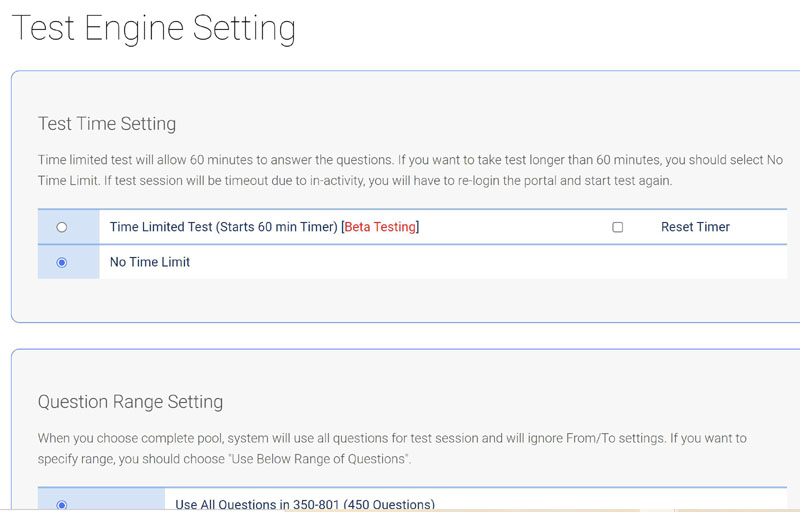
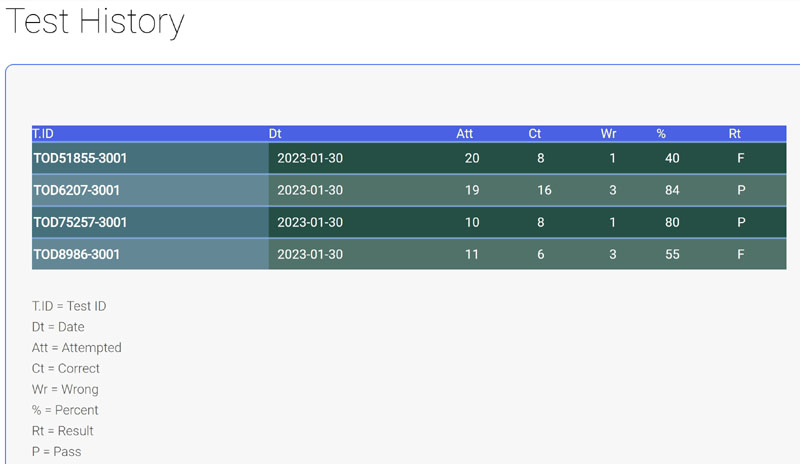
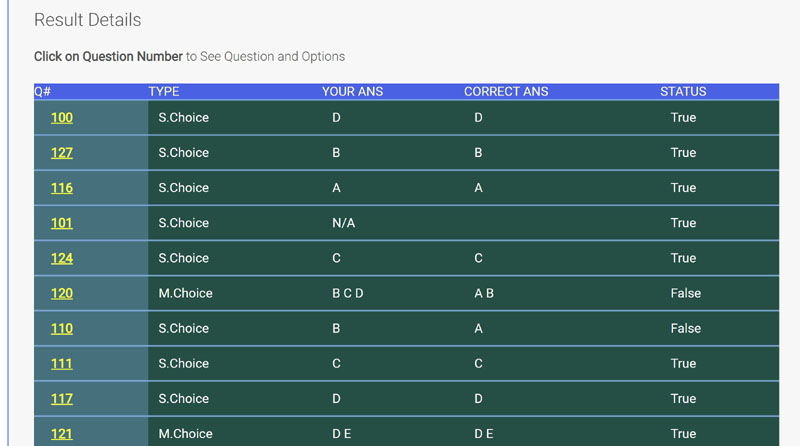
Killexams.com invites you to explore its free CCSP test demo. The CCSP Exam Questions practice test is seamlessly compatible with Mac, Windows, Android, and Linux, offering effortless usability. You can print CCSP Question Bank TestPrep to create a personalized study guide for on-the-go learning. When confident in your preparation, hone your skills with the VCE test simulator’s practice tests. Killexams.com provides six months of complimentary updates for CCSP Certified Cloud Security Professional test questions, ensuring you stay equipped with
To achieve success in the ISC2 CCSP exam, merely reading the coursebook is not sufficient. At killexams.com, we are dedicated to clarifying your understanding of the CCSP course blueprint, syllabus, and objectives, while equipping you with the knowledge to tackle complex scenarios and questions that may appear in the real CCSP exam. Begin by downloading our complimentary CCSP PDF demo questions and reviewing them thoroughly. If you find them valuable, proceed to register and obtain the complete version of CCSP practice questions at an exclusive discounted rate. Upon downloading, you can also install the CCSP VCE test simulator on your computer and engage in regular practice with CCSP testprep to reinforce your preparation. For those who are always on the move, the CCSP free pdf dumps PDF can be downloaded on any mobile device or computer, allowing you to study and memorize genuine CCSP questions during your spare time. Continuously practice with the VCE test system until you feel fully prepared to ace the real CCSP exam. Our CCSP free pdf dumps is offered in two convenient formats: CCSP PDF file and CCSP VCE test simulator. The PDF can be viewed on any device, and you even have the option to print CCSP testprep to create a personalized study book. With an impressive pass rate of 98.9% and a 98% similarity between our CCSP study guide and the real exam, killexams.com ensures you pass the ISC2 CCSP test swiftly and efficiently in just one attempt. Visit killexams.com today to take the first step toward certification success!
CCSP Practice Questions, CCSP study guides, CCSP Questions and Answers, CCSP Free PDF, CCSP TestPrep, Pass4sure CCSP, CCSP Practice Test, obtain CCSP Practice Questions, Free CCSP pdf, CCSP Question Bank, CCSP Real Questions, CCSP Mock Test, CCSP Bootcamp, CCSP Download, CCSP VCE, CCSP Test Engine
I used a combination of books and my years of experience to prepare for the CCSP exam. However, the Killexams.com prep unit proved to be the most valuable resource, as the questions were exactly what I saw in the exam. I scored 89% in my CCSP exam, and I highly recommend Killexams.com Questions Answers and the test Simulator to anyone preparing for this challenging exam.
Shahid nazir [2026-6-11]
I recently renewed my killexams.com membership for the CCSP exam, finding their tests essential for my preparation. The high-quality practice exams of test questions deliver me confidence that I will score over 95%. I am grateful for their outstanding resources and encourage others to use them.
Richard [2026-6-18]
Starting my own IT business required the CCSP exam, but the course lectures were overwhelming. Killexams.com practice exams with test dumps simplified the material, enabling me to prepare effectively and pass the test with confidence. Their resources were a game-changer, and I strongly recommend them to anyone navigating the challenges of CCSP test preparation.
Martha nods [2026-4-17]
More CCSP testimonials...
Certified Cloud Security Professional Latest Questions
Certified Cloud Security Professional test engine
Certified Cloud Security Professional Free PDF
Certified Cloud Security Professional Free test PDF
Certified Cloud Security Professional Practice Test
Certified Cloud Security Professional Latest Questions
Certified Cloud Security Professional Free test PDF
Certified Cloud Security Professional MCQs
Certified Cloud Security Professional MCQs
Certified Cloud Security Professional MCQs
Certified Cloud Security Professional MCQs
Certified Cloud Security Professional MCQs
Is CCSP latest course required to pass exam?
Yes, You need the latest CCSP course to pass the exam. This CCSP course will cover all the Questions Answers of the latest CCSP syllabus. The best place to obtain the full CCSP dumps collection is killexams.com. Visit and register to obtain the complete dumps collection of CCSP test brainpractice questions. These CCSP test questions are taken from real test sources, that\'s why these CCSP test questions are sufficient to read and pass the exam. Although you can use other sources also for improvement of knowledge like textbooks and other aid material these CCSP practice questions are enough to pass the exam.
Absolutely yes, Killexams is completely legit and fully efficient. There are several characteristics that makes killexams.com authentic and authentic. It provides up to par and completely valid test dumps including real exams questions and answers. Price is very low as compared to the majority of the services online. The Questions Answers are refreshed on usual basis having most recent brain dumps. Killexams account set up and item delivery can be quite fast. Record downloading is usually unlimited and incredibly fast. Help is available via Livechat and Contact. These are the features that makes killexams.com a sturdy website that supply test dumps with real exams questions.
CCSP - Certified Cloud Security Professional test dumps
CCSP - Certified Cloud Security Professional test contents
CCSP - Certified Cloud Security Professional PDF Questions
CCSP - Certified Cloud Security Professional test prep
CCSP - Certified Cloud Security Professional information search
CCSP - Certified Cloud Security Professional Practice Questions
CCSP - Certified Cloud Security Professional Dumps
CCSP - Certified Cloud Security Professional testing
CCSP - Certified Cloud Security Professional Latest Topics
CCSP - Certified Cloud Security Professional test
CCSP - Certified Cloud Security Professional PDF Dumps
CCSP - Certified Cloud Security Professional test success
CCSP - Certified Cloud Security Professional real Questions
CCSP - Certified Cloud Security Professional test
CCSP - Certified Cloud Security Professional Cheatsheet
CCSP - Certified Cloud Security Professional PDF Braindumps
CCSP - Certified Cloud Security Professional Latest Topics
CCSP - Certified Cloud Security Professional syllabus
CCSP - Certified Cloud Security Professional test contents
CCSP - Certified Cloud Security Professional PDF Questions
CCSP - Certified Cloud Security Professional book
CCSP - Certified Cloud Security Professional learning
CCSP - Certified Cloud Security Professional Question Bank
CCSP - Certified Cloud Security Professional education
CCSP - Certified Cloud Security Professional real questions
CCSP - Certified Cloud Security Professional exam
CCSP - Certified Cloud Security Professional techniques
CCSP - Certified Cloud Security Professional PDF Questions
CCSP - Certified Cloud Security Professional test success
CCSP - Certified Cloud Security Professional study help
CCSP - Certified Cloud Security Professional Practice Test
CCSP - Certified Cloud Security Professional learning
CCSP - Certified Cloud Security Professional Study Guide
CCSP - Certified Cloud Security Professional braindumps
CCSP - Certified Cloud Security Professional Real test Questions
CCSP - Certified Cloud Security Professional Latest Topics
CCSP - Certified Cloud Security Professional test dumps
CCSP - Certified Cloud Security Professional Question Bank
CCSP - Certified Cloud Security Professional test syllabus
CCSP - Certified Cloud Security Professional real Questions
CCSP - Certified Cloud Security Professional test format
CCSP - Certified Cloud Security Professional book
CCSP - Certified Cloud Security Professional guide
CCSP - Certified Cloud Security Professional dumps
Prepare smarter and pass your exams on the first attempt with Killexams.com – the trusted source for authentic test questions and answers. We provide updated and Checked practice test questions, study guides, and PDF test dumps that match the real test format. Unlike many other websites that resell outdated material, Killexams.com ensures daily updates and accurate content written and reviewed by certified experts.
Download real test questions in PDF format instantly and start preparing right away. With our Premium Membership, you get secure login access delivered to your email within minutes, giving you unlimited downloads of the latest questions and answers. For a real exam-like experience, practice with our VCE test Simulator, track your progress, and build 100% test readiness.
Join thousands of successful candidates who trust Killexams.com for reliable test preparation. Sign up today, access updated materials, and boost your chances of passing your test on the first try!
Below are some important links for test taking candidates
Medical Exams
Financial Exams
Language Exams
Entrance Tests
Healthcare Exams
Quality Assurance Exams
Project Management Exams
Teacher Qualification Exams
Banking Exams
Request an Exam
Search Any Exam
 Free CCSP Practice Test Download